
Review: The Perils of Girlhood by Melissa Fraterrigo
Reviewed by Laura Johnson Dahlke
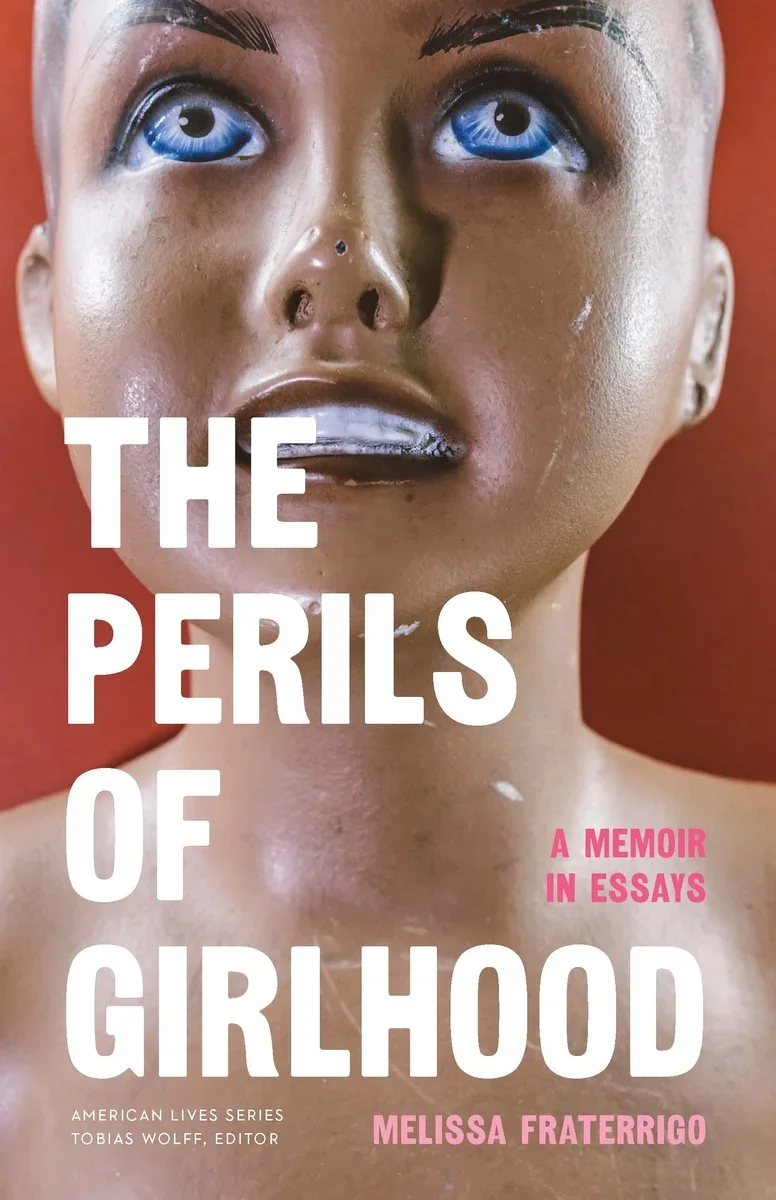
Melissa Fraterrigo’s The Perils of Girlhood is a thought-provoking exploration of the many challenges faced by girls and women living in the United States. Written with a deft skill for figurative language and experimental structures like collage and braiding, Fraterrigo’s memoir in twenty essays spans most of her life, starting from the 1980s. Readers encounter everything from her first sexual experiences, disordered eating, and sexual harassment, to miscarriages, mothering daughters, and living with chronic fear and anxiety. The book is largely written to build solidarity with girls and women against the wrongs men have committed. Her dedication even reads, “For my girlfriends.”
As a mother, Midwesterner, and fellow member of Generation X, I felt immediate kinship with Fraterrigo. I appreciated her many time-stamped cultural references such as Madonna’s “Like a Virgin” video, a Pink Floyd T-shirt, Zinka sunscreen, Umbro clothing, Certs mints, Revenge of the Nerds, and playing Spin the Bottle. One reference, the Barbie Style Head, even has its own essay, one of my favorites from the collection.
These nods to pop culture were welcome caesuras from the weighty subjects of The Perils of Girlhood. It’s important but difficult to learn that as a 14-year-old girl, Fraterrigo’s college-aged swimming coach pulled her “into the pool with him,” dunked her repeatedly, and pressed “his hard knob” against her, his grip entrapping and frightening her. That same sense of panic and terror emerges when her college boyfriend holds her down in his apartment bedroom and tells her, “You can’t go. You aren’t leaving,” his “choking heaviness” restricting her breath.
As Fraterrigo reports, “All women at some point fear,” when discussing the murders of two adolescent girls in a nearby town. She asks her husband “What if the murderer is living in our midst? How could we keep our daughters safe?” Though he is quick to dismiss the possible danger, the author knows she’ll live in fear and further notes that anxiety and PTSD are more prevalent among females because “women are exposed to more traumatic events such as rape, attempted rape, and abuse.” Women, she tells readers, “frequently expect harm” and subsequently receive it.
In turn, if men do not inflict harm upon them, girls and women often inflict it upon themselves. They echo Fraterrigo’s daughter Eva’s admission: “I just don’t like myself.” Like the author in her youth, many women diet, sometimes to the point of losing their periods, and exercise obsessively. As she writes of her own disordered eating, “As hungry as I was, it was the mirror that kept me going. I’d stand before it most days and memorize the space between my thighs,” allowing herself only liquids if the scale edged “past 100.”
As a woman in America, I have also experienced the societal pressures to look a certain way and felt the sting of constant male critique and assessment. I remember being told in high school, “You’d be perfect, if your breasts were bigger,” that my body was “just average,” and that I wasn’t as pretty as a boy originally thought. My mom let me know I needed a girdle, though I played volleyball and was waifishly slim.
Too many girls wonder — Am I thin enough? Fit enough? Smart enough? Dumb enough? Tough enough? Soft enough? Agreeable enough? Assertive enough? Sexy enough? Saintly enough? Serious enough? Funny enough? Am I enough?
As Fraterrigo’s father wryly asserts, “It’s always one thing or another with you women.”
Instead of pushing girls to think they must meet an unrealistic standard (if Barbie were real, she would have a BMI of 17!) and put others’ needs ahead of their own, society must ask, “Why do women feel the constant need to be pleasing?”
My fervent hope is that, though written largely for women, men will read The Perils of Girlhood and gain insight and empathy into girls’ and women’s lived experiences. As Thich Nhat Hanh writes, “Understanding someone’s suffering is the best gift you can give another person. Understanding is love’s other name. If you don’t understand, you can’t love.” Regrettably, I fear too few will.
To the reader, I recommend absorbing The Perils of Girlhood over several days or even weeks. Along with exposing the consequences of a patriarchal society, Fraterrigo writes about a mass shooting at the University of Iowa, suicide, cancer, and sick children. Though the book is accessible and engaging, the subjects of the essays are substantial and meant for reflection.
To the writer, I thank her for her honesty and bravery. Bearing witness matters. I also hope that by writing The Perils of Girlhood, Fraterrigo has gained a greater understanding of herself and of the past. They say writing is cathartic, and I certainly hope it was.
Laura Johnson Dahlke, PhD, is a writer and scholar who is passionate about topics relating to pregnancy, childbirth, and reproductive technologies. She is the author of Outer Origin: A Discourse on Ectogenesis and the Value of Human Experience. In her work she synthesizes complex ideas from various disciplines such as medical science, philosophy, literature, and psychology with clarity and readability. Along with writing, she teaches English courses at the University of Nebraska at Omaha. In her spare time, Laura practices Iyengar yoga, bakes sourdough bread, and avidly reads books on positive psychology and human potential. She lives in Omaha, Nebraska with her family, after having spent many years on both the east and west coasts.