
Interview: Nicole Graev Lipson
By The Linden Review Staff
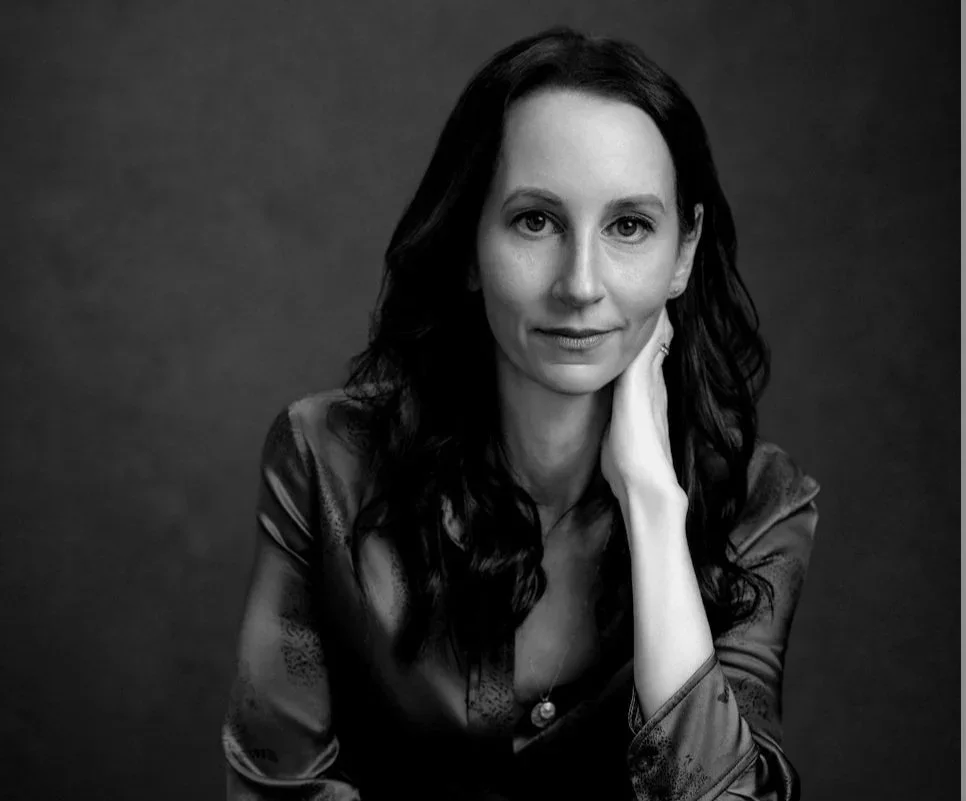
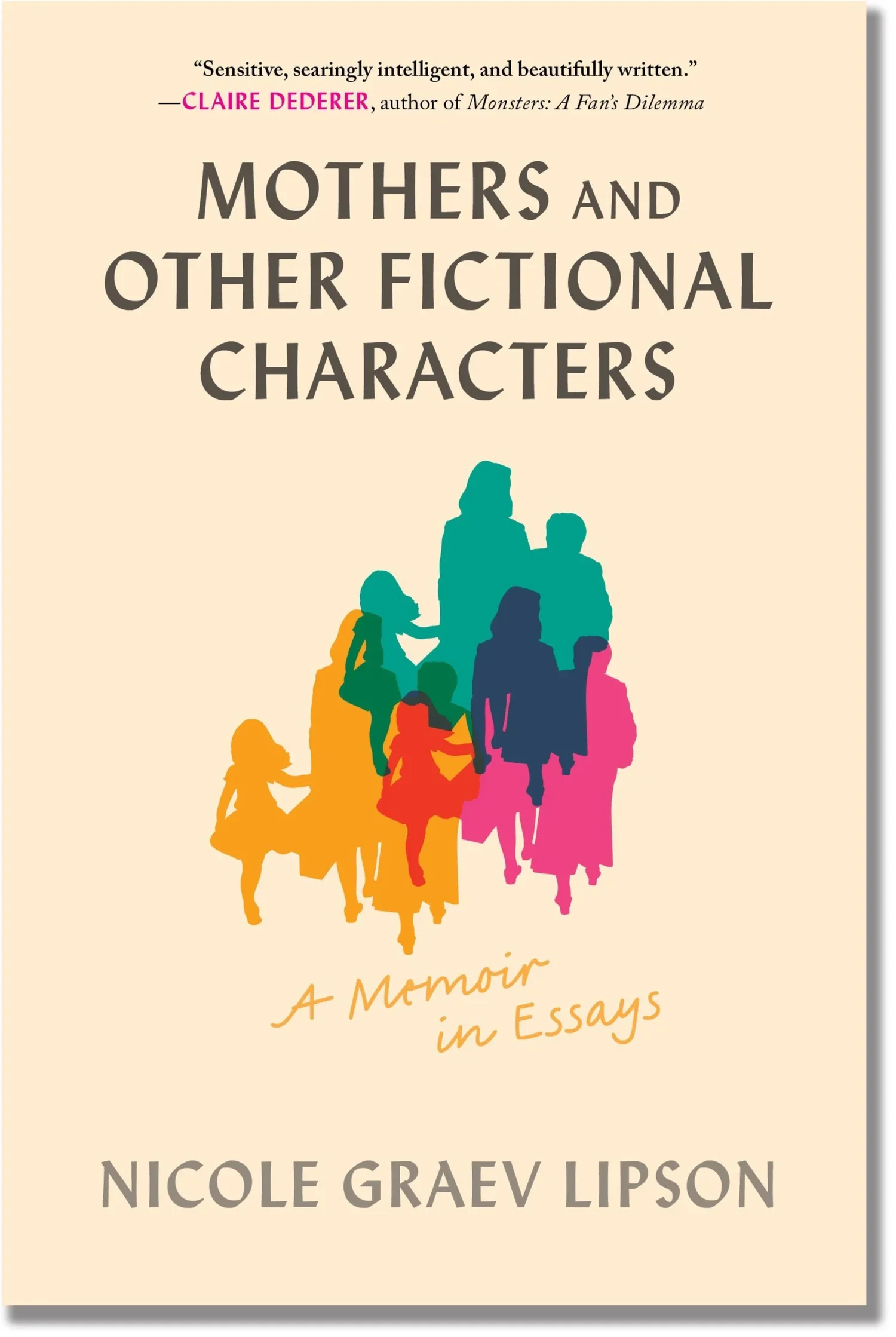
In her non-linear collection, Mothers and Other Fictional Characters: A Memoir in Essays, Nicole Graev Lipson explores the complexities of motherhood and the various roles that accompany it—woman, lover, wife, daughter, teacher, friend, writer. Through her exploration, Lipson weaves inherited stories of womanhood with the perspectives of fictional characters. In the stories of these fictional characters Lipson finds solace, commonality with other women, and a fresh viewpoint on the underlying questions of her memoir. She writes, “How can a woman resist the sweet siren call of the mother ideal? How can she carve out a motherhood that’s not a projection of others’ fantasies, but an authentic expression of her values?” Lipson invites the reader into her reflections and life stories with incisive, lyrical, and unforgettable prose.
Lipson spoke with The Linden Review over email about her debut memoir.
The Linden Review: What inspired you to write a book centered on motherhood with themes of womanhood, aging, identity, and coming of age?
Nicole Graev Lipson: For a few years after my oldest child was born, I felt wholly and painfully divorced from the creative parts of myself. In the book, I describe this as the sensation of “a vein being cauterized.” I was trying desperately to conform to the archetype of the Perfect Mother—endlessly patient and self-sacrificing—and couldn’t figure out how to square this desire with my writing aspirations, which required a different sort of intense devotion.
Eventually, when my youngest was no longer a baby, I was overcome by a fierce, bodily determination to write again. Motherhood reshaped me as a writer in two ways. First, it taught me that time is finite and that it’s up to us to use it as our hearts most long to. And second, it magnified all the injustices I’d always deeply cared about, making them all the more urgent. It was one thing, for instance, for our culture’s misogynistic beauty standards to have turned me against my own body for years. But imagining this happening to my daughters, or my son repressing his tenderness to fit masculine ideals, drew me to the page with new fire.
When I began the book, I envisioned it to be primarily an exploration of motherhood and of the blurry boundary between truth and fiction in mothers’ lives. I wanted to understand why, since becoming a mother, I’d been haunted by the strange feeling that I was half myself and half an imitation. But over time, I began to realize that the ideal “Mother,” with a capital M, is just one of the many fictions girls and women are urged to inhabit over the course of the female life span. And it was at this point that I began to widen the lens on the experiences I was capturing, delving into the fictions not just of motherhood, but of girlhood, young adult womanhood, midlife, and older age.
TLR: When did you discover that the essay format was the right one for Mothers and Other Fictional Characters?
NGL: I’m not sure this was a discovery as much as a given, since the essay is pretty much the only thing my brain knows how to write! It has been my favorite genre since college, when I stumbled into a course called “The Art of the Essay,” taught by a brilliant professor named Lydia Fakundiny. I had spent my whole life up until that point feeling like everyone else in the world knew what it was we were doing here on this planet, what this business of being human was all about, while I had somehow missed the memo. I was confused in the most basic sense about how to be and act in the world—and I felt really self-conscious and ashamed of this confusion until I discovered that there was a whole form dedicated to exploring confusion, the form of the essay. I realized it was a place where bewilderment and ambivalence could not only be laid bare but also turned into art.
In terms of Mothers and Other Fictional Characters specifically, the essay form, in its expansiveness and open-endedness, felt like a really apt container in which to grapple with the questions I was taking on, which were the sort of questions that don’t have definitive, clear-cut answers: What to make of one’s extramarital desires? How to raise a temperamentally sensitive boy in a patriarchal culture? Where to find the strength to resist female beauty standards? I am not trying to answer these questions in any sort of definitive, one-size-fits-all way, but simply to hold them up to the light and turn them around in my hands, considering them from a variety of prismatic angles.
TLR: In your essay “Witch Lineage,” you reflect on the significance of our mothers and how they shape our understanding of womanhood. You write, “We look to them for clues to who we are, and what it means to move through the world in female form. We come to understand that our mother signifies, and that our relationship with her is a story crucial to pursue.” How do you see your relationship with your mother influencing your relationship with your daughters?
NGL: I consider myself extremely fortunate to have been raised in a home full of love, where I felt safe and supported. My mother was not perfect because no mother is perfect. She could at times be distracted, irritable, or self-absorbed, or quick to jump to negative conclusions. But what I learned from her—and from my father as well—is that when a child understands on a deep and visceral level that they are loved, there’s a decent margin for error in terms of the mistakes a parent can make. This love is like a cushion underlying everything.
What I explore in “Witch Lineage” is how experiencing motherhood first-hand helped me see my own mother in a more compassionate light. The missteps she made in her parenting—some of which I’d held against her for years—transformed in my eyes from “flaws” to the inevitable misses and stumbles of being human. I began to see that when we, as women, hold our mothers to the same impossible standards that our culture holds them to, we also end up placing these expectations on ourselves and feeling ashamed and guilty when we fail to meet them. Forgiving my mother for her humanness helped me be more forgiving of my own imperfections, and there’s perhaps nothing that has helped me have a positive relationship with my own children more than this. I truly believe that the easier we are on ourselves, the easier we are on those we love.
TLR: You portray a genuine and authentic experience of motherhood, openly sharing/reflecting on the challenges, shortcomings, and imperfections, while also highlighting the struggle to maintain one’s sense of self. How crucial was it to illuminate the realities of motherhood and its often hidden aspects—the repressed desires that are overshadowed by the overarching identity of mother? Furthermore, what do you believe needs to occur at either a societal or individual level for mothers to live their truth?
NGL: Writing about my experience of motherhood with unvarnished honesty—even if it made me unlikable on the page at times—was absolutely crucial to the project of writing this book. What motivated me to sit down at my desk day after day, no matter how tired or discouraged I was, was my belief that writing can be a way of cracking through the easy, surface stories we tell about ourselves and others, which are so often stories we’ve been handed by our culture. As risky as it felt to do so at times, I was determined to voice thoughts and feelings that I had long thought of as un-voiceable before. It wasn’t so much that I wanted to shatter norms. I simply wanted to normalize some of what we’re taught, as women, to be aberrant or shameful, when in reality they’re just a normal, natural part of being human.
As for what needs to occur for mothers to live more truthfully, I think there are both collective and individual shifts we should be working towards. On a societal level, we need to stop romanticizing self-erasure as the hallmark of being a “good mother.” That means changing the way we talk about caregiving, labor, and women’s time, creating structures that actually support mothers rather than glorify their exhaustion. Individually, I think it’s about finding the courage within ourselves to resist the performances we’re coaxed into giving. I very much believe that when we speak up about our experiences in honest, thoughtful, loving, respectful ways, we invite other people to do the same. This kind of mutual recognition can be quietly revolutionary, because once you name what’s real, it’s harder for the world to keep pretending otherwise.
TLR: In your memoir, you openly discuss your children’s challenges and struggles, reflecting on the personal impact of supporting them through those times. What considerations did you account for when writing about your children, particularly regarding your candid approach to Leigh’s gender nonconformity? Do you think about how your children might react to your memoir if/when they read it?
NGL: When I decided to write about my children in the memoir, I knew I was entering emotionally risky territory. Parenting, by its very nature, involves witnessing and sometimes being shaped by your children’s struggles, and it felt important not to erase those experiences from my story. At the same time, I was acutely aware that those stories aren’t mine alone. Every scene involving my children required a balance between honesty and protection. I wanted to write truthfully about my journey as a mother while preserving their privacy and dignity.
Each essay in my book taught me something different about how to go about this, but I did adhere to a few general principles that felt ethically comfortable to me. For starters, I made sure to write only from my embodied perspective—what I could actually see, feel, hear, taste, and touch with my own senses. I knew it wasn’t my place to try to inhabit my children’s interior world, or to claim omniscience about their thoughts and feelings. This felt especially important when writing about Leigh’s gender journey, and the tangle of thoughts and feelings I was trying to unknot as I witnessed Leigh migrate away from the identity of a girl. My goal wasn’t to tell Leigh’s story. My goal was to tell the story of a mother who loves her child profoundly and is trying to learn in real time how best to nourish and support them in a changing world.
The poet Mary Oliver wrote that attention is the beginning of devotion, and that’s exactly how I think about writing about my children—as an act of love and attention. I can’t predict how they’ll feel about these essays in the future. But what I hope they’ll see, if any, when they read my book, is that their mother loved them so deeply that she found them worthy of her sustained attention, reflection, and care.
TLR: Why was it important to you to write about Leigh’s gender exploration? And how do you see it fitting in with the other themes in the book?
NGL: I mentioned earlier that my essays are born from a feeling of confusion, and this was particularly true when writing “As They Like It,” in which I reflect on Leigh’s journey. On the one hand, I love my children more than words can encompass, and I wanted Leigh to know I supported them wherever this journey was headed. On the other hand, this experience was entirely new for me. We don’t come into this world as parents fully formed. We become parents in the doing—but I had never parented a gender nonconforming child before.
As a reader, I’m always looking for companionship and the feeling that I’m not alone. I was hungry for stories of other parents who were trying to get their footing as they witnessed their child migrate to a new gender identity. But most of the pieces I could find by parents of gender nonconforming or trans children were persuasive in their rhetorical mode--op-eds in the service of a politicized stance. I began to write about my own experience almost out of a sense of desperation. Not finding kindred spirits in my reading, I hoped just maybe I could reach them through my words. When “As They Like It” eventually made its way into the world—first in Virginia Quarterly Review, and then in The Best American Essays, and finally, in my book—it meant the world to me to start hearing from other parents who connected with my experience, and who wrote to me sharing a bit of their own stories.
One of the central themes of Mothers and Other Fictional Characters is the blurry boundary between truth and fiction in our lives. In many ways, “As They Like It” is an exploration of what happens when the templates we carry in our minds about our children—how we imagine they will act and present and move through the world—run counter to the very real humans unfolding and growing before us. This piece, like all of the essays in the book, is about learning to see what is true and real and then evolving to embrace that truth.
Nicole Graev Lipson is an essayist, journalist, and critic. Originally from New York City, she lives outside of Boston with her family. Her writing has appeared in The Sun, Virginia Quarterly Review, the Gettysburg Review, River Teeth, The Millions, the Washington Post, the Boston Globe, and Marie Claire, among other venues. Her work has been awarded a Pushcart Prize, nominated for a National Magazine Award, and selected for The Best American Essays 2024.