
Review: The Search for Mother Missing by Janine Vance
Reviewed by Terri Dreismeier
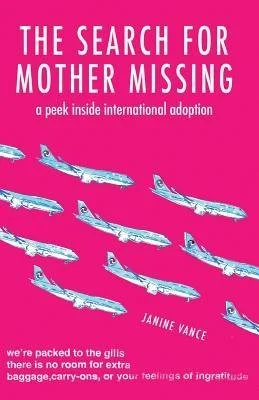
In The Search for Mother Missing, adoptees Janine Vance and her twin sister Jenette embark on a deeply personal and transformative journey to uncover truths about their identity and heritage, reflecting the broader struggle of adoptees everywhere. Through a heart-wrenching narrative and using meticulous research, Vance delves into the complexities of international, transracial adoption, a system often shrouded in secrecy and unanswered questions.
At six months of age, Janine and Jenette were adopted from Korea by a Caucasian married couple who embodied the stereotypical traditional family. Vance writes:
My beautiful adoptive parents tried to uphold all-American ideals. They believed in presenting themselves in the best light. My dad collected American cars. My mom collected white porcelain dolls. She wore beauty products from Avon and decorated the house from JCPenney and Sears sales. She dressed my sister and me in fluffy pastel Easter and red velvet Christmas dresses and Mary Jane shoes. We ate jarred spaghetti sauce over noodles and sweet and sour chicken over Uncle Ben’s rice. We ordered pizza on Friday nights.
Born in 1972, the twins grew up believing they were fully American. At the age of twenty-five, they discover they only have green cards, not actual US citizenship, after having lived in the country practically their entire lives. According to their adoption paperwork, Janine and Jenette are still “alien immigrants and foreign children floaters” between two nations. It is this rootlessness that brings questions of their origins to the forefront of the sisters’ lives.
Previously, the twins had avoided questions about their adoption. They felt it would seem ungrateful or even disrespectful to their adoptive parents. The twins were told they were found in a box on a street corner in Seoul and nothing more. However, now in their thirties, they journey back for the first time to their Korean Motherland to attend an international conference for Korean-born adoptees who hope to learn more about their culture and background and find their biological family. It’s on their trip, however, that they experience the shady dealings of the international adoption agencies and other eye-opening and life-altering experiences.
While the sisters are in Seoul, Janine turns to Holt International Adoption Agency, the agency her adoptive parents used, for answers. She anticipates being provided with the names of her biological parents and information about her origins. While standing in the middle of the Korean adoption service office on Korean soil, she is told by an agency clerk that all her files have been moved:
“Your file is not here.”
“What? What do you mean?
“Your file is not here.”
“Why?”
“Holt International moved years ago.”
“I did not know that.”
“Well, it’s not here. The international office is located in Oregon. That’s where the files are. You need to go there.”
“Isn’t this Holt International?” Janine questions sarcastically. At this point, she can no longer conceal her frustration and bitterness.
This is the pivotal moment that changed Janine from adoptee to an adoptee advocate. After returning to America, she becomes an activist for the United Nations Convention on the Rights of the Child (UNCRC)—the 1989 international human rights treaty which sets out the civil, political, economic, social, health, and cultural rights of children under the age of eighteen. Presently, both sides of the Holt International Agency—the Korean and Oregon locations—are still refusing to provide Vance information about the twins’ biological parents.
As an adoptive mother, I connected with Vance’s story on a deeply personal level. My son Adam (Korean name, Jang SuHo) was labeled “orphaned”; however, we, like the twins’ parents and thousands of other adoptive parents, were under the impression that “orphaned” meant the loss of one or both biological parents. Vance writes, “Why were non-orphaned children allowed to be labeled orphaned in adoption marketing campaigns, websites, and even adoption law?” The complexity of orphaned versus abandoned plagues my mind, too.
The written summary my husband and I received stated that Adam was with his biological parents and some extended family for the first four months of his life. His adoption paperwork states that in March 2001, he was taken to Sungnam Shelter (I can only deduce this was close to his birthplace in Yeosi-su, Korea) and then abandoned. I have spent hours trying to pinpoint this place. Holt International, the same agency that facilitated the twins’ adoption, refused to help me when I attempted to research Adam’s story. To this day, I live with unanswered questions.
On the Adoption Truth and Transparency Worldwide Network website, where I first discovered Vance’s book and contacted her, The Search for Mother Missing is highly recommended. It won the Reader’s Favorite book award and was the first-place winner in 2020. Vance’s book is a truthful story; she is humble yet insightful. The poignant journey in searching for her origins and her biological mother is gripping and filled with bittersweet moments of humanity. Vance discusses issues of pain and loss with dignity, yet readers are sure to see the world of international adoption and its inherent problems differently.
Is there serendipity with me stumbling upon this book and finding parallel meaning in twins’ journeys and Adam’s? I believe so. Vance explores the complicated intersections between adoption and politics, religion, profiteering, and family relationships. Her memoir has had an everlasting impact on me, and though some questions about Adam’s adoption still haunt me, I found lasting solace in reading The Search for Mother Missing.
Theresa Dreismeier (Terri), has a BS in Education from the University of Nebraska at Omaha (UNO), and an MA in Leadership from Bellevue University. She and her husband adopted a baby from Korea in July 2001. In April 2023, their son died from suicide. Terri returned to UNO and is enrolled in the Advanced Writing Certificate and pursuing an MA in English with an emphasis in creative nonfiction. She currently works as an authorized substitute teacher. In her free time, Terri enjoys reading, writing, hiking, exercising, and volunteering with her husband.