
Interview: Megan Williams
By Ashley Delaney
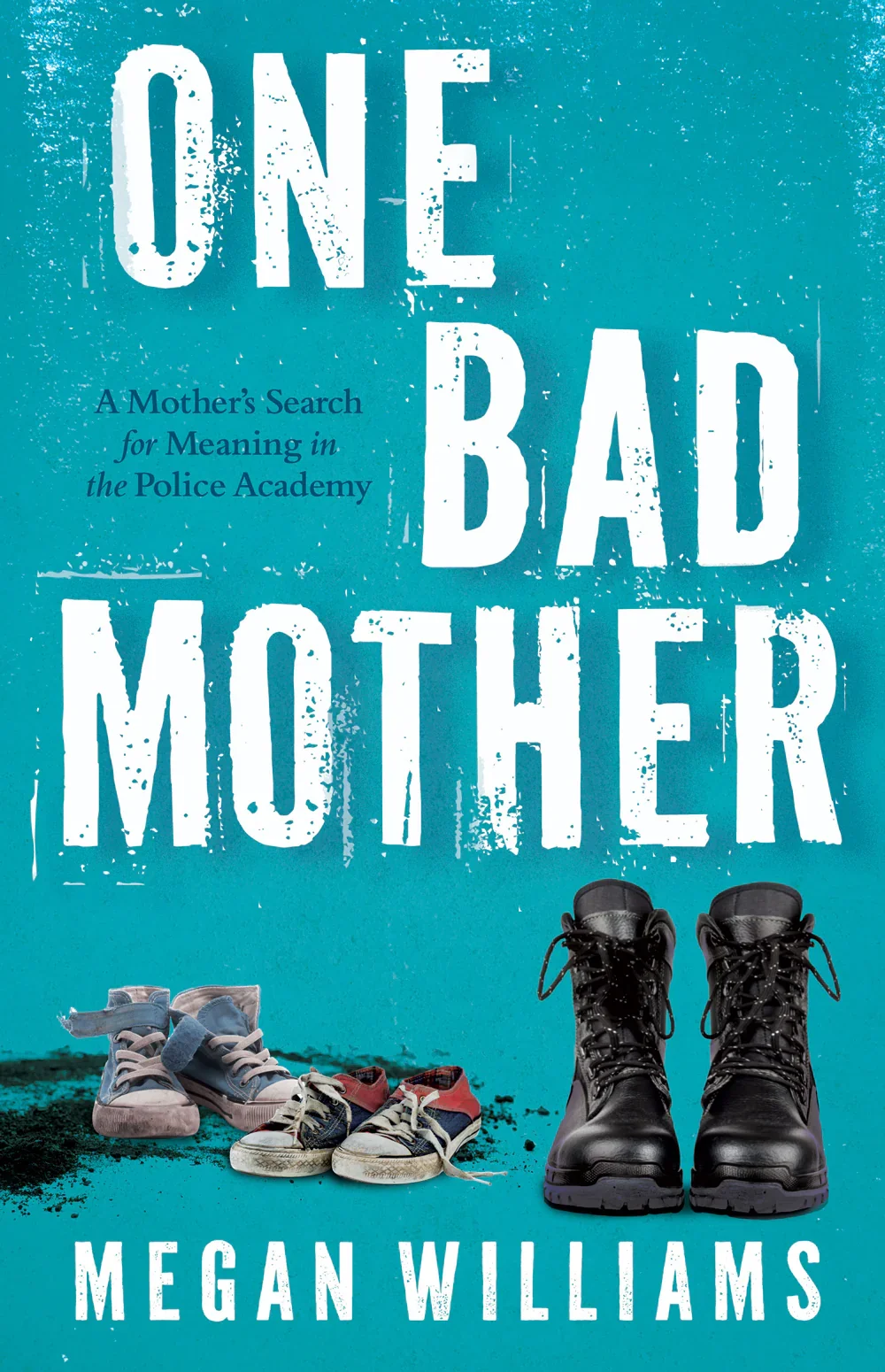
After her six-year-old daughter puts a hammer through a wall, Megan Williams decides to abandon a career as an academic and become a police officer.
It’s not lost on her that she may have applied to the Police Academy to escape the realities of mothering twins born via IVF at twenty-nine weeks. As the twins grow and test her endlessly, she feels she is failing. She needs a win.
During a grueling application process, Megan measures herself against the other candidates and confronts the normative notions of what it is to be a good mother. The paralyzing fear that she is a bad mother looms large in her head, as does the real possibility that she might not make the cut at the Academy. With its intertwined narratives of police recruitment and motherhood, the memoir provides an unflinching journalistic view of big-city law enforcement, set atop a personal journey during which Megan learns gratitude and makes peace with a motherhood far different from the dream sold to her by our culture.*
I interviewed Megan Williams over email about her writing process, life tests, being a “bad mother,” and more.
Ashley Delaney: What is the origin story of One Bad Mother: A Mother's Search for Meaning in the Police Academy? When did you know you had a book as opposed to a standalone essay? Why was it important for you to write it?
Megan Williams: I had always wanted to write about the complete isolation and lack of cultural support I felt as a new mother, but this didn’t seem to be enough of a narrative until I quit the Academy. I didn’t have the confidence to own that story. The final day at the Academy was catastrophic on so many levels for me emotionally. After hours of the sergeants speaking ignorantly of motherhood and family commitments—telling us that there was no excuse to be late because "Little Jimmy got the sniffles"—I started to wake up and realize that their voices sounded surprisingly similar to the ones in my head and in our culture. At that point, I got really angry and decided to push back against all the voices and advocate for myself and the legitimacy of my voice.
AD: I’m not a mother, but I am a daughter. I didn’t read the narrator as being a bad mother, especially given the challenges she was facing in raising premature twins. Can you talk more about the title choice? In what ways did you feel as if you were a bad mother? Is the title a double entendre meant to convey your ambitious, and what is sometimes considered strong-willed, personality?
MW: I chose this title because I wanted to push against all the social strictures defining what it means to be a “good mother” and a “bad mother.” If I reclaimed the language and the insult, I could move on—as if to say, yeah, I am a bad mother in your eyes. I am going to own that and talk about what I really want to discuss, which is labels and judgement and legitimizing yourself and your personal conflicts.
AD: In the chapter “Breathing Room,” you write, “In life, there were the real tests—parenthood and birth and breathing… You carried the results of the real tests with you everywhere.” The theme of tests and their existence in various states throughout life—as either pen-to-paper or physical tests, or tests of willpower—appears consistently throughout the book. You encounter many tests, from the birth of your premature twins to drug test(s), to a psychology test, all of which either contributed to or were involved in the process of applying to the Philadelphia Police Academy. Why was it important to you to frame the book with this idea?
MW: The funny part about the framework of tests is that it was my husband Augie’s idea. I couldn’t figure out how to structure the book. I had so many drafts where I put the end at the beginning, the middle, so many different iterations of the manuscript. I’d shut it away in a drawer for months. Then my husband and I were running. We were talking about the book. He tried to pass me, and I wasn’t having it. That’s when he suggested that the book is about a series of tests that ultimately have no meaning in the end—just like us competing against each other. We can try to beat each other, to win that “test,” but the value is in the journey—of getting out the door together and talking. The win means nothing.
AD: Why did you decide on the braided style of memoir, as opposed to a traditional memoir? What was the process like of choosing the braids—mother and police academy applicant—and finding ways they connected to one another?
MW: I started writing this as a straight narrative about applying to the Philadelphia Police Department. I kept notes, little descriptions on my computer as the process dragged on. In earlier drafts, the police narrative definitely dominated, but as I continued to work on it, I found that I was much more interested in the narrative of motherhood and ambition. The behavior of the police just became so predictable—yes, they were sexist and racist. This isn’t news to anyone. And I certainly wasn’t in a position to be an expert on how to change the department. But, as I say in my conclusion, I was in the position to make one person like me feel less alone and desperate as a mother or writer.
One of the most amazing things to me as this book has made its way into the world has been the reaction of my mother’s generation. She is in her eighties, and all of her friends have loved my book. So many of them have reached out to me personally to say, “I can’t believe that your generation is still struggling with all the things we did as women and mothers.” While this message is depressing, it is also affirming: the story still needed to be told.
AD: What sort of challenges did you encounter when writing One Bad Mother? Which new “tests” did you confront as a writer, and an English enthusiast?
MW: My background is as an academic, and I had a really hard time editing a large part of that voice out of the book. Somewhere on my computer there are pages of meta-analysis of the language of the reading comprehension test and pages of me continually quoting T.S. Eliot back to the sergeants in my head. I had to delete most of these and remind myself that I’d already written a dissertation that no one read. The academic voice appears here, but mostly with film quotations. Years ago, I took a writing class with Rick Moody, and he told me I needed to “stop flexing.” While he was referring to a different manuscript of mine, I thought a lot about this when I was writing One Bad Mother. I wanted to be approachable, real, and deeply flawed. Academic voices, particularly in English, are not. Well, maybe they are flawed, but they usually don’t make you laugh and cry and feel all the things.
*Introductory text adopted from jacket copy for One Bad Mother: A Mother's Search for Meaning.
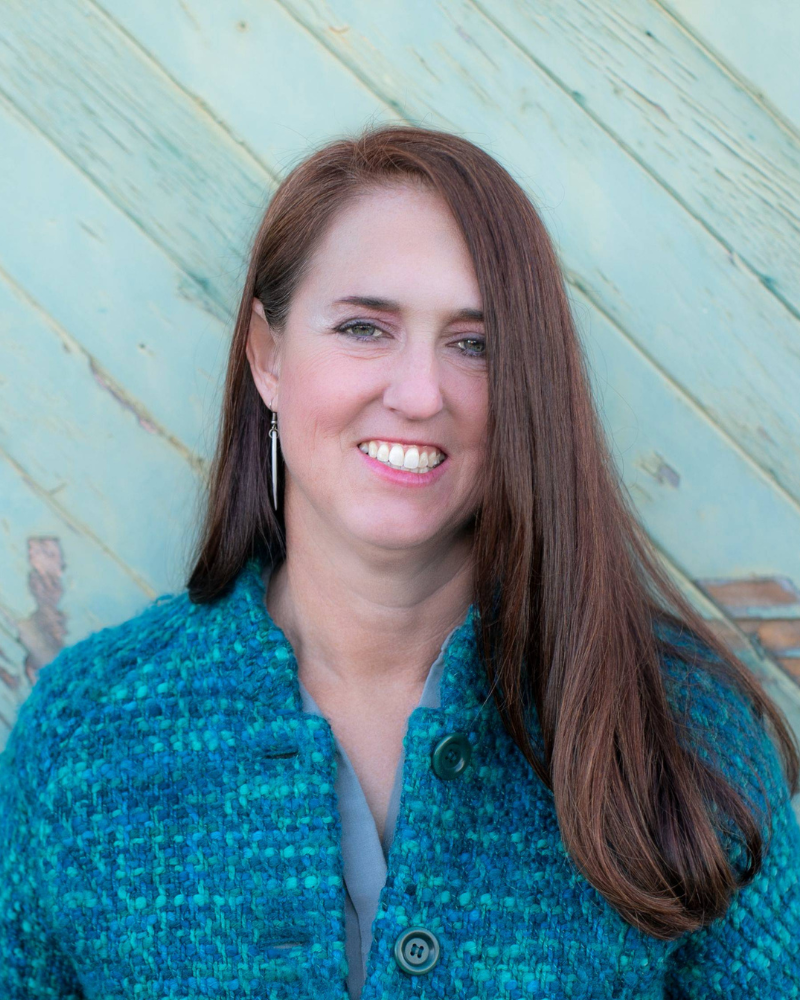
Megan Williams received her PhD in English from Temple University and taught at Lafayette College and Santa Clara University for twenty years prior to applying to the police academy. She currently lives in Bellingham, Washington, with her husband and twins.
Ashley Delaney is an undergraduate student at the University of Nebraska at Omaha where she studies Creative Nonfiction Writing and History. As a native of the Midwest, she writes about her experiences as a Nebraskan and hopes to be a magazine editor in her future.